Concentrated Power Is Still the Organizational Problem No One Wants to Solve
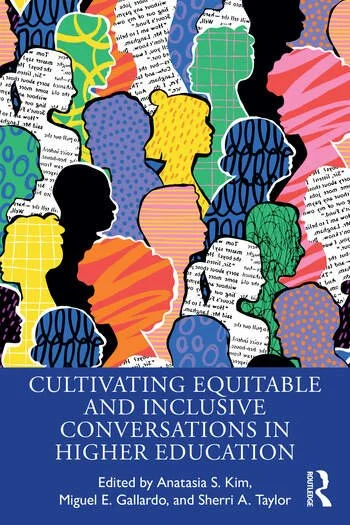
Last year, Sheila Thomas, PhD, and I co-authored a chapter called "Addressing and Acknowledging Power and Privilege" in Cultivating Equitable and Inclusive Conversations in Higher Education (Routledge, 2025). The book is a practical guide written for academic institutions. But when I wrote it, I wasn't thinking about one sector. I was thinking about every organization I had ever worked at, studied, or advised — across corporate, academic, and nonprofit sectors. They all fell into the same trap.
The trap is this: organizations talk about equity without interrogating the systems of power that maintain inequity. They pretend to invest in change, but it stops at the superficial — programming (keep it cheap!), events, representation — while leaving hierarchy, decision-making authority, informal networks, and institutional norms completely untouched. Leadership always seems to think that doing the work means changing things around them. Oh, we have inequity at this company — let's set a goal! But it's bullshit, because real change requires the leader to change. And that's where most leaders don't want to do the work. It's fine to support equity as long as it doesn't involve ME having to do anything differently. The result is a performance of inclusion layered on top of a structure designed to protect the status quo.
In the chapter, Sheila and I examine how power becomes normalized and invisible inside institutional culture. We look at who has influence, who gets heard, who is protected, and who is expected to adapt. We draw a hard line between performative equity efforts and structural change — and we name the role leadership plays in either redistributing power or hoarding it.
What strikes me now, a year later, is how prescient this work feels. The conversation about AI, workforce transformation, and the future of work is fundamentally a conversation about power — who gets displaced, who gets retrained or redeployed, whose labor is valued, and whose is quietly pushed to the fringe. These aren't new dynamics. They're the same patterns we mapped in the chapter, accelerated by technology and stripped of the language that used to soften them.
If you lead people, this matters. Not because power is inherently wrong — but because concentrated, unexamined power is where organizations break. It's where trust erodes, retention collapses, and the gap between what you say you value and what people actually experience becomes impossible to ignore.
Sheila and I wrote frameworks for navigating this. The book was written for higher education. The problem isn't higher education's. Its leadership’s.